This is a piece from the year 2017 performed at the barbecue of the Jazz & Pop School. The melody consists of an Indian pentatonic. Essentially, this is a minor pentatonic with a major third. I especially like the mysterious, psychodelic intro by the string instruments.
Dies ist ein Stück aus dem Jahre 2017, aufgeführt auf dem Jahresfest der Jazz & Pop School. Die Melodie basiert auf einer indischen Pentatonik, die aus einer Moll-Pentatonik entsteht, in der die Moll-Terz durch eine Dur-Terz ersetzt wird. An dieser Aufnahme mag ich vor allem das geheimnisvolle, tranceartige Intro der Saiteninstrumente.
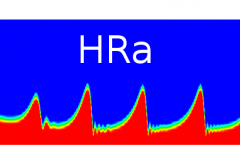
The title refers to the double meaning of heavy. It is employed in physics as well as in music, only think of heavy metal. Thus a piece of tonal physics was created and performed at the barbecue of the Jazz & Pop School in 2018. When you listen to the recording, I recommend to close your eyes. Imagine you are chasing through the vacuum of the beam pipe with so many other ions of your bunch almost at the speed of light. Again and again you are accelerated by high frequency cavities, being kept on track by superconducting magnets. 🙂
Auf diesen Titel kam ich, weil mir die Doppelbedeutung von heavy auffiel. Sowohl in der Physik als auch in der Musik wird dieses Adjektiv gebraucht, denken Sie nur an heavy metal. Und so entstand eine Komposition der tonalen Physik, die beim Jahresfest der Jazz & Pop School 2018 aufgeführt wurde. Wenn Sie die Aufnahme abspielen, schließen Sie am besten die Augen. Stellen Sie sich vor, Sie würden mit ganz vielen anderen Ionen Ihres Bündels durch das Strahlrohr sausen mit nahezu Lichtgeschwindigkeit. Immer wieder angetrieben durch Hochfrequenzkavitäten, auf der Bahn gehalten von supraleitenden Magneten. 🙂
First I composed a bossa with a lot of typical offbeat which I called Easy Bossa. It was never performed, since it seemed too difficult. Therefore only a Band in a Box version exists:
I simplified the Easy Bossa now calling it Easier Bossa. Still it is not easy, but easier.
In the Orangerie Garden Darmstadt the Jürgen Wuchner Workshop Band performed it in the summer of 2015. I especially like the relaxed atmosphere of the recording.
Das ist ein Bossa mit viel typischem Offbeat. Ursprünglich schrieb ich den Easy Bossa, der nie zur Aufführung kam, weil er mir zu schwierig schien. Daher existiert nur eine Tonfassung mit Band in a Box:
Ich vereinfachte den Easy Bossa und nannte die neue Version Easier Bossa. Er ist noch immer nicht easy, aber easier.
Im Sommer 2015 führte ihn die Jürgen Wuchner Workshop Band im Orangeriegarten Darmstadt auf. Ich mag vor allem die entspannte Atmosphäre, die diese Aufnahme ausstrahlt.
I would like to add some remarks on the harmonic background. The melody consists of a Japanese pentatonic. This can be built by a major pentatonic where the major third is substituted by a minor third and the second note becomes the root. I give an example:
D major pentatonic: D E F# A B
Major third is substituted by minor third: D E F A B
Second note becomes root: E F A B D
When I harmonised the melody, I did not do the last step. To stay within the example, I kept D as the root.
Ich möchte noch etwas über den harmonischen Hintergrund schreiben. Die Melodie besteht aus den Tönen einer japanischen Pentatonik. Diese entsteht durch eine Dur-Pentatonik, in der man die Dur-Terz durch die Moll-Terz ersetzt und dann den zweiten Ton zum Grundton erklärt. Ich gebe ein Beispiel:
D-Dur-Pentatonik: D E F# A B (englische Notation, d.h. B steht für das deutsche H.)
Moll-Terz ersetzt Dur-Terz: D E F A B
Zweiter Ton wird Grundton: E F A B D (japanische Pentatonik in E)
Bei der Harmonisierung des Stückes habe ich den letzten Schritt nicht gemacht. Ich bin, um bei dem Beispiel zu bleiben, von D als dem Grundton ausgegangen.